Fascinating Facts About Violins That Inspire Musicians
The violin, often referred to as the most expressive instrument in the orchestra, has a rich history filled with captivating stories and remarkable features. This instrument, which has been a staple in both classical and contemporary music, holds secrets that can inspire musicians and music lovers alike. From its intricate construction to its role in various music genres, the violin is not just an instrument but a symbol of creativity and passion. In this article, we will delve into some fascinating facts about violins that can spark your inspiration and deepen your appreciation for this remarkable instrument.
The Craftsmanship Behind Violins
One of the most compelling aspects of the violin is the craftsmanship involved in its creation. The traditional violin is made from several types of wood, including spruce for the top, maple for the back and sides, and ebony for the fingerboard. Each type of wood contributes to the instrument's overall sound quality. For instance, spruce is known for its excellent resonating properties, which allow the violin to produce a bright and powerful sound.
Moreover, the process of crafting a violin can take several months or even years. Luthiers, the craftsmen who create violins, go through extensive training to master techniques that have been passed down through generations. They meticulously shape each piece of wood, taking into consideration the thickness, curvature, and weight, all of which affect the instrument's tonal quality.
For example, the renowned Stradivari violins, crafted by Antonio Stradivari, are celebrated for their unparalleled sound. Experts believe that the unique combination of wood types, varnish, and construction techniques used by Stradivari contributes to their exceptional acoustics. Such craftsmanship underscores the notion that a violin is not merely a tool for musicians but a work of art.
The Violin's Role in Different Music Genres
While the violin is most commonly associated with classical music, its versatility allows it to thrive in various music genres. In folk music, the violin takes on a different character, often played with a more rhythmic and less formal style. For instance, in Irish traditional music, fiddlers use a technique called fiddle bowing, which creates a lively and spirited sound. This style emphasizes fast-paced melodies and vibrant rhythms, showcasing the violin's adaptability.
People Also Look For:
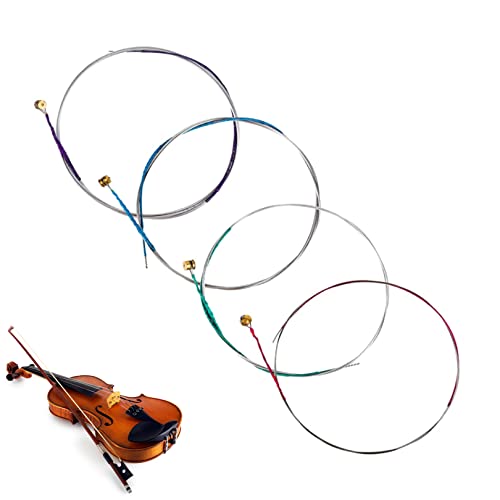
- 4 PCS Violin Strings Full Set, Universal Carbon Steel Copper Wound with Copper-Plated Ball End Classic Steel Strings for Instrumen...
- Fansjoy 2 Sets Violin Strings Full Set (G-D-A-E), Universal Violin Strings with Nickel-plated Ball Ends, Compatible with 4/4 & 3/4...
- D\'Addario Orchestral - Helicore 4/4 Size Violin Strings Set with Plain Steel E String - H310 4/4M - Full Set - Medium Tension
- Thomastik Infeld Violin strings for Violins Dominant Pro Set DP100
- Violin Strings 4/4 Set 12Pcs Universal Classic Silver Steel Medium Gauge Strong Violin Strings with Nickel-Plated Ball End for 4/4...
In jazz, the violin has found its place as a solo instrument, with musicians like Stéphane Grappelli paving the way for its incorporation into the genre. Grappelli's improvisational skills and ability to blend traditional violin techniques with jazz elements opened new avenues for violinists. His performances illustrated how the violin could not only complement but also lead in a jazz ensemble.
The transition of the violin into popular music has also been significant. Artists like Lindsey Stirling have redefined the role of the violin by incorporating electronic music and dance. Her unique fusion of classical violin and modern beats has captivated a diverse audience, proving that the violin can resonate across generations and genres.
Historical Significance of the Violin
The violin's history is rich and varied, dating back to the 16th century. It emerged during the Renaissance period and quickly became a favorite among musicians in Europe. The evolution of the violin coincided with significant cultural movements, including the Baroque, Classical, and Romantic periods. Each era brought distinct styles of play and composition, influencing how the violin was perceived.
During the Baroque period, composers like Vivaldi and Bach wrote extensively for the violin, highlighting its capabilities as a solo instrument. Vivaldi's "The Four Seasons" remains one of the most celebrated works, showcasing the violin's ability to convey emotion and depict nature's changing moods. This period marked the violin's rise as a prominent instrument in orchestras, further solidifying its place in music history.
In the 19th century, the Romantic movement brought about new techniques and expressive possibilities for violinists. Composers such as Tchaikovsky and Brahms wrote virtuoso pieces that challenged performers to push their limits. The technical demands of these compositions elevated the status of the violinist and contributed to the evolution of violin pedagogy.
Modern Innovations in Violin Technology
Today, innovations in violin technology continue to inspire both musicians and luthiers. The advent of electric violins has transformed the way the instrument is perceived and played. These modern variations allow for greater versatility, enabling musicians to experiment with sound effects and amplification. Electric violins can be found in various music genres, from rock to electronic, expanding the instrument's reach.
Additionally, advancements in materials have led to the development of synthetic strings and composite materials for violin construction. These innovations offer durability and consistency, appealing to musicians who seek reliable performance in various settings.
Furthermore, digital tools have revolutionized how musicians learn and practice. Online platforms provide access to tutorials, masterclasses, and virtual lessons from renowned violinists. This accessibility has democratized violin education, allowing aspiring musicians to hone their skills regardless of their location.
Real World Examples of Violin Impact
Consider the story of a young girl named Sarah, who discovered her passion for the violin at a community music program. With dedicated practice and guidance, she went on to perform at her local symphony orchestra. Her journey illustrates how the violin can serve as a gateway for self-expression and creativity.
Similarly, renowned violinist Itzhak Perlman, who overcame physical challenges, has inspired countless individuals through his music and advocacy. His performances transcend technical proficiency, resonating with audiences on a profound emotional level.
- Violins can vary significantly in price, from affordable student models to priceless antiques.
- The violin family includes the viola and the cello, each contributing its unique voice.
- Many famous composers wrote concertos specifically for the violin, showcasing its versatility.
The journey of the violin continues to evolve, inspiring musicians around the world. Its rich history, craftsmanship, and adaptability make it a fascinating subject for exploration. As we uncover more about this remarkable instrument, the stories and facts that surround it will surely inspire future generations of musicians.